Condensed Milk Flan: The Silkiest Custard You’ll Make at Home
There’s a point in late autumn when the oven stops feeling like a burden and starts feeling like a gift. You want something that fills the kitchen with warmth, something that looks like you spent all day on it — but the days are shorter now, and you didn’t. Condensed milk flan has always been that dessert for me. Except the first three times I made it, I pulled something out of the bain-marie that looked more like scrambled eggs in caramel than the glossy, quivering custard I had in my head.
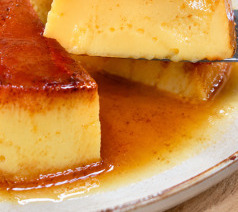
This recipe gives you a flan with a genuinely smooth, trembling texture — no bubbles, no rubbery edges — using just a handful of pantry staples and one baking technique that changes everything. It takes about 15 minutes of hands-on work. The oven does the rest. You’ll have a dessert that looks like it came from a restaurant counter, ready to unmold and serve.
Pro Tip

The mistake most home cooks make: they pour the custard mixture straight into the mold while it’s still warm from whisking, then wonder why the finished flan has tiny air bubbles trapped throughout and a slightly grainy texture. Heat accelerates protein bonding before the custard even hits the oven. The fix is simple — let your egg and milk mixture rest for 10 full minutes after mixing, then strain it through a fine-mesh sieve before pouring. This resting step allows surface foam to dissipate and the proteins to relax, giving you that clean, glassy interior every time.
Sweetened condensed milk is on the baking aisle in every major supermarket — the 14 oz (397 g) can is the standard size you need here. For the eggs, large free-range eggs give a slightly richer color and flavor. Whole milk works best; avoid reduced-fat versions, which produce a looser set. If you can’t find whole milk, evaporated milk (unsweetened) used at half the quantity adds body and works as a solid backup.
Condensed Milk Flan: The Silkiest Custard You’ll Make at Home
6
servings15
minutes50
minutes340
kcal4
hours5
hours5
minutesIngredients
1 can (14 oz / 397 g) sweetened condensed milk
1 1/4 cups (300 ml) whole milk
3 large eggs
2 egg yolks
1 tsp vanilla extract
3/4 cup (150 g) granulated sugar (for caramel)
3 tbsp (45 ml) water (for caramel)
Directions
- Preheat your oven to 325°F (160°C). A lower temperature is non-negotiable here — anything above 340°F (170°C) will cause the eggs to seize and leave you with a pocked, rubbery surface instead of a smooth one.
- Make the caramel. Combine sugar and water in a small heavy saucepan over medium heat without stirring. Watch for the edges to turn amber first — that’s your cue to gently swirl the pan. When the whole surface is a deep copper color and smells like toasted nuts rather than just sweet, pull it off the heat immediately.
- Pour caramel into a 9-inch (23 cm) round cake pan or six individual ramekins. Tilt the pan quickly to coat the base evenly — the caramel sets fast, and you have about 20 seconds before it locks in place.
- Whisk eggs, yolks, condensed milk, whole milk, and vanilla together in a bowl. Whisk gently rather than vigorously — you want everything combined, not aerated. Foam on the surface now means bubbles in your finished flan.
- Rest the mixture for 10 minutes, then strain through a fine-mesh sieve into the prepared pan. This is the step most recipes skip — don’t. The sieve catches any chalazae or unblended egg bits that would show up as white streaks in the final custard.
- Place the pan in a deep roasting dish and pour hot water around it to reach halfway up the sides. The bain-marie keeps the temperature around the custard steady at roughly 200°F (93°C), which is what creates that silky, even set rather than a tight, bouncy one.
- Bake for 45–50 minutes. The flan is done when the edges are fully set but the center — about a 2-inch (5 cm) circle — still has a slow, lazy wobble when you nudge the pan. It will firm up as it cools.
- Cool to room temperature, then refrigerate for at least 4 hours before unmolding. Run a thin knife around the edge, place a rimmed plate on top, and flip in one confident motion — hesitation causes the caramel to pool unevenly.
Variations

For a citrus lift, add the zest of one orange to the custard mixture before straining — it cuts through the sweetness and works especially well in the individual ramekin format. For a coconut version, swap the whole milk for full-fat coconut milk (the kind from a can, not a carton) and reduce vanilla to half a teaspoon.
Serving Suggestions
A small scoop of unsweetened whipped cream alongside balances the caramel’s intensity without competing with it. Thin slices of fresh mango or a handful of raspberries add a sharp, juicy contrast that makes every bite feel lighter. Strong black coffee — brewed short and hot — is the classic pairing, and it works.
FAQ
Why did my flan come out with holes or bubbles inside?
This almost always comes down to oven temperature being too high or the mixture being over-whisked before baking. In my kitchen, dropping the temperature to 325°F (160°C) and using the 10-minute rest before straining eliminated this completely after testing three batches back to back.
Can I make this a day ahead?
Yes — and it actually improves overnight. The texture firms up just enough to unmold cleanly, and the caramel loosens into a proper sauce. Keep it covered in the fridge for up to 2 days before serving.
My caramel hardened before I could coat the pan — what went wrong?
Caramel moves fast, and a cold pan makes it seize even faster. Try warming your pan briefly in the oven (about 2 minutes at 300°F / 150°C) before pouring — it gives you a few extra seconds to work. Though if you’ve ever wondered whether a slightly thicker caramel layer actually changes the final flavor once it melts back into sauce…